


July 2, 2026
%201%20(2).png) Read more
Read more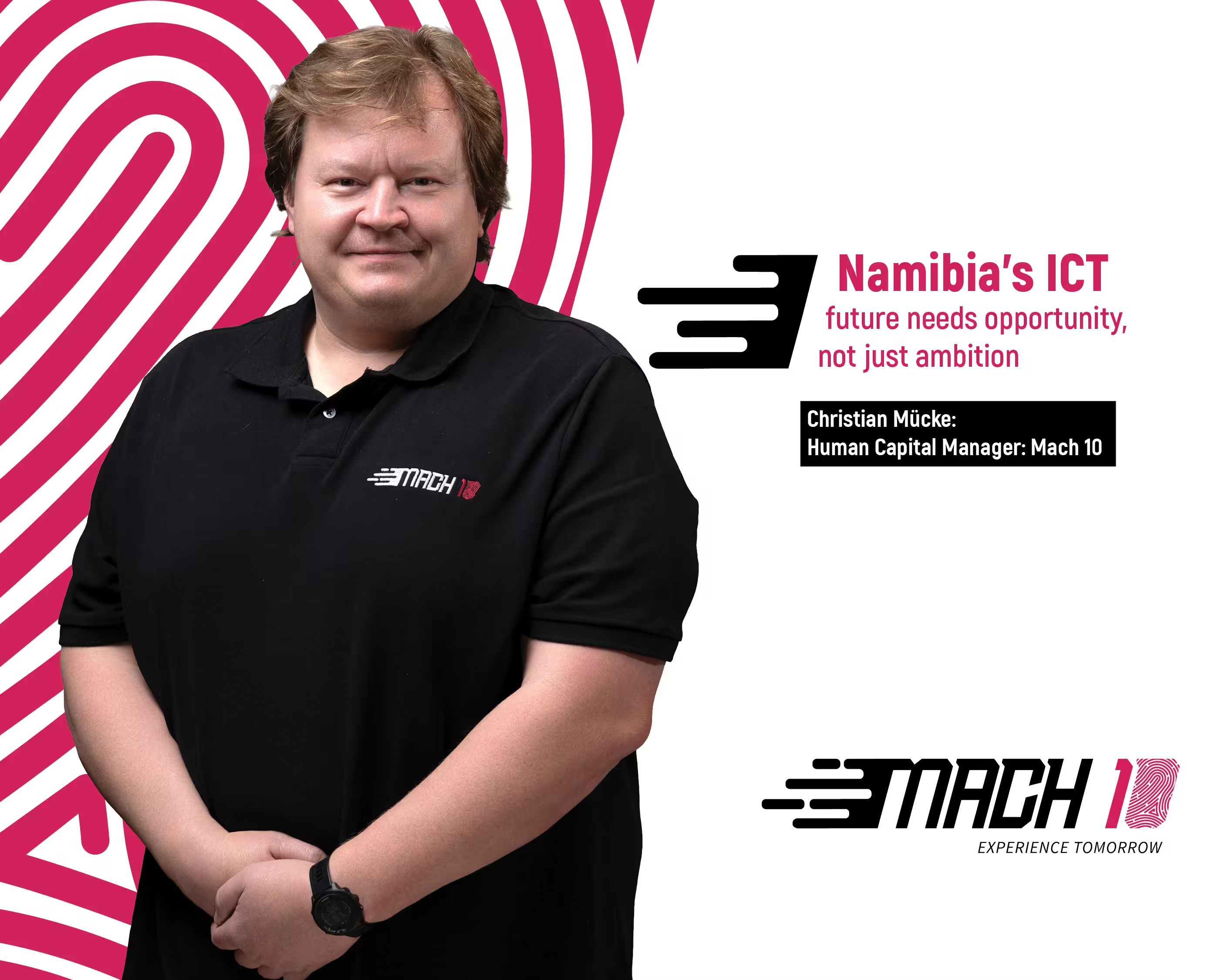
The future of Namibia’s ICT industry rests as much on people as it does on technology. It will be shaped by how well we prepare young people, develop relevant skills and create genuine opportunities for them to thrive in an increasingly digital, AI-driven world.
As Human Capital Manager at Mach 10, I work at the point where people, business needs, skills development and career growth meet. The most pressing disconnect I see is between young jobseekers entering the labour market and the capabilities employers need in complex technical environments.
Namibia has ambitious, educated young people who are eager to contribute. Yet a solid ICT qualification may come with limited exposure to enterprise networks, cloud environments, cybersecurity or the business-critical systems graduates will eventually support. The qualification has value, but moving from academic knowledge to workplace application requires a further stage of development.
Employers often ask for experience, while young people cannot gain it without an opportunity. At Mach 10, we help bridge this gap through internships, technical exposure, structured learning and support towards industry-recognised certifications. Closer collaboration among ICT businesses, educational institutions, training providers and industry bodies can align programmes more closely with workplace requirements. Practical projects, mentorship, simulations and internships should become a standard part of preparing young people for employment.
Work readiness rests on three pillars. The first is technical competence: the ability to apply knowledge and continually build relevant skills. The second is professional competence, reflected in communication, teamwork, reliability, customer service and accountability. The third is learning agility: the willingness to adapt as technology evolves.
Industry-recognised certifications can strengthen a professional profile, particularly when combined with practical exposure and the ability to turn technical knowledge into sound business outcomes.
Employers should therefore look beyond qualifications and years of experience. I look for curiosity, accountability, systematic problem-solving, clear communication, customer awareness and adaptability. ICT is a service-driven industry, so interpersonal skills matter alongside technical ability. As part of the OL Group, Mach 10 also values people who bring the OL Persona of authenticity, care and passion to how they work, learn and serve others.
Employers must nurture these qualities through coaching, constructive feedback and supportive cultures. Recruitment should consider what candidates can do today and what they could become with the right guidance.
Digital technology underpins almost every industry. Entry-level support roles can lead to network engineering, cloud, cybersecurity, solutions architecture or technology leadership. Other pathways include software development, data analytics, automation, project management and service delivery.
Recognised certifications and practical experience can help Namibian professionals build transferable skills. International mobility is one measure of success, but Namibia also needs professionals who strengthen local businesses. We should develop internationally competitive talent while giving it good reasons to build its future at home.
Mach 10’s XT social media series supports this aim by placing young people in the spotlight. Participants who have joined the programme share their experiences, offering an honest view of their development and of the opportunities available in ICT. Their stories make the industry relatable and help other young Namibians see possible pathways into the field.
Artificial intelligence is changing ICT work by assisting with incident analysis, knowledge retrieval, coding, testing and the identification of unusual activity. Some routine tasks will change and we should take that shift seriously.
The key question is - are young professionals preparing to work effectively alongside AI? Its outputs still require human judgement, technical validation, ethical consideration and business context. Organisations will need people who can integrate AI responsibly, maintain security and assess business value.
Young professionals should build strong technical foundations, learn to use AI responsibly and understand its limits, including inaccurate outputs, privacy risks and security vulnerabilities. The ICT professional of the future will be defined by the ability to combine knowledge, human judgement and emerging technology to create value.
Developing Namibia’s ICT workforce is a shared responsibility. Educational institutions can deepen practical learning and industry collaboration. Young professionals should treat qualifications as the start of a development journey. Employers can create entry-level opportunities, invest in structured learning, offer mentorship and recognise potential alongside experience.
At Mach 10, talent development is part of building a sustainable business. Our future depends on the technologies we implement, the services we deliver and the people we grow. HR supports workforce planning, skills development, career progression and readiness for change.
Namibia has the ambition and potential. What it needs is a stronger bridge between education and employment, supported by meaningful opportunities and employers willing to invest in development. When we give young people the chance to learn, the guidance to grow and the confidence to adapt, we build careers, strengthen businesses and advance Namibia’s digital future.
.jpg)
.jpg)




_Post%203.jpg)
