September 30, 2026
 Read more
Think about how much our businesses have evolved in just a few years.
Our people work from different locations. Applications that once sat inside the organisation now run in the cloud. Suppliers and partners connect into business processes remotely. Branches, devices, applications and data are increasingly interconnected. More of the processes we depend on every day have become digital.
And now AI is introducing another shift in how people interact with technology and information.
We have embraced many of these changes because they make our businesses more connected, more efficient and more responsive.
But there is a question I believe we need to ask more often:
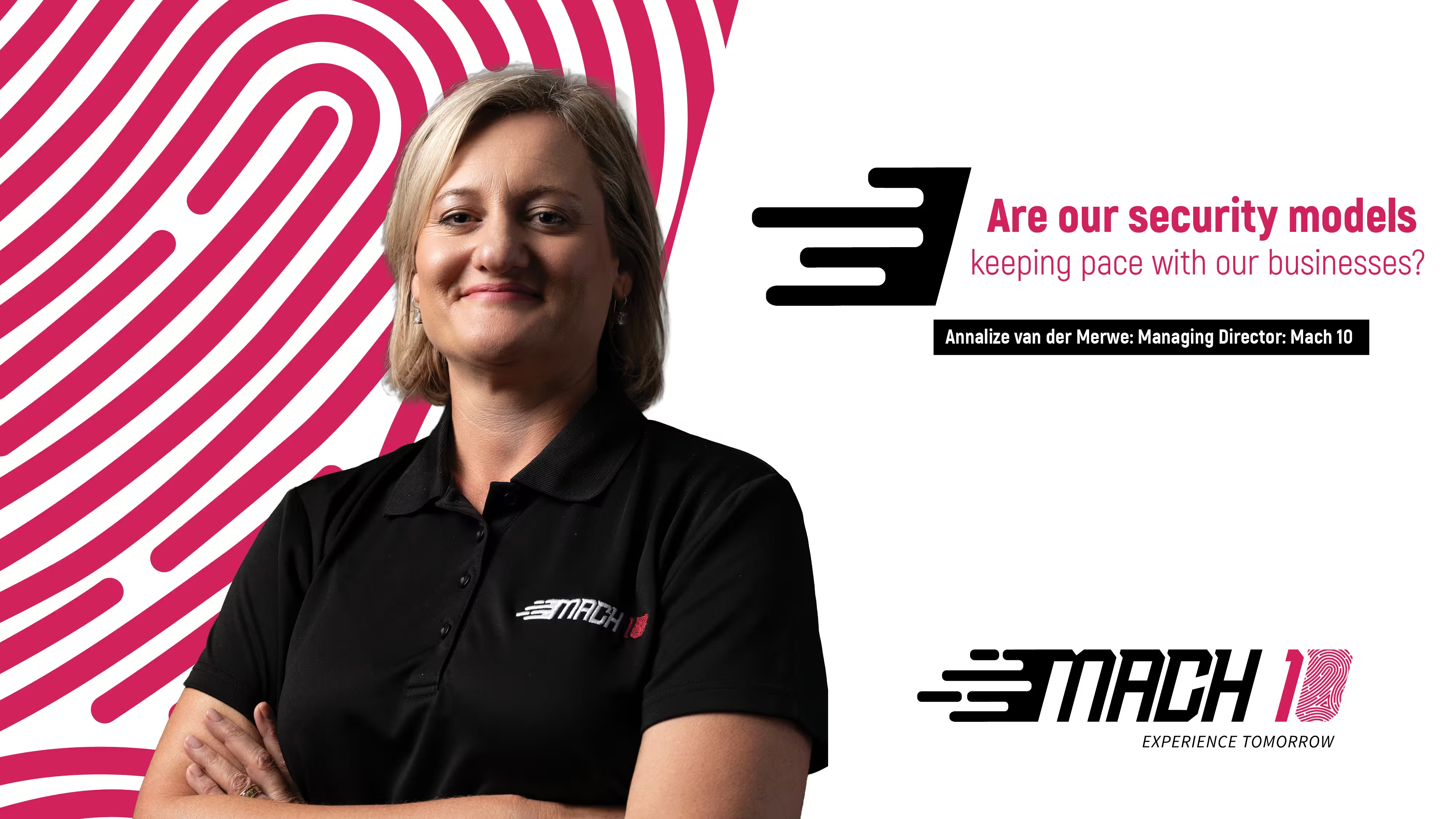
Have our security models changed at the same pace as our businesses?
For many years, cybersecurity boundaries were built around a relatively clear idea of where the organisation began and ended. The world, however, has changed.
Today, the security boundaries of all organisations are increasingly difficult to define.
A single business process may involve an employee working remotely, accessing a cloud-hosted application from a mobile device, while information moves between different systems and third-party providers.
None of this is inherently a problem. It is simply the reality of a modern business. It is becoming a risk when the business evolves, but the assumptions supporting its security do not. That is why I believe the conversation needs to go beyond whether an organisation has invested in cybersecurity.
The more important question is:
Is the cybersecurity we have still appropriate for the business we have become?
There is rarely a single moment when an organisation's technology environment changes completely. It evolves gradually.
Individually, each decision may make complete business sense, however over time, the environment we are protecting can look very different from the one our original security architecture was designed for. This is the risk that deserves attention and we need to ask the question: has our business outgrown the security model protecting it?
Security needs to evolve with the business and should never only respond to decisions after the business has made them.
When an organisation changes how its employees work, how customers interact with it, where applications are hosted, how suppliers connect or how critical services are delivered, its risk environment changes too.
That does not mean cybersecurity should stand in the way of business transformation.
Quite the opposite.
The purpose of security should be to enable the business to change with confidence. For business leaders, that means cybersecurity conversations cannot happen only when an incident occurs, when an audit identifies a weakness or when regulation demands action.
They need to happen as the business evolves.
Compliance will matter. Resilience matters now
Namibia's cybersecurity environment is evolving. NAM-CSIRT recorded 513,921 cyber vulnerabilities and 161,547 cyber events in the second quarter of 2026, increases of 39.8% and 56.7% respectively from the previous quarter. The National Cybersecurity Incident Management Guidelines 2026 were also launched on 29 April 2026.
These developments are important.
Regulation, legislation and compliance will undoubtedly form part of how Namibia strengthens its cybersecurity environment, but organisations should not wait for a compliance requirement to tell them that cybersecurity matters.
We should not allow the absence or status of legislation to determine how seriously we manage business risk. If cybersecurity only becomes a priority because legislation requires it, we have started the conversation too late.
Cyber resilience is built through the decisions organisations make every day about how they use technology, how their businesses evolve and how the risks created by that evolution are managed.
The real test is not simply whether we comply. It is whether our approach to security continues to evolve as quickly as the business it is there to protect.
As business leaders, we don't need to become cybersecurity engineers, but we need to understand how dependent our businesses have become on technology and whether the way we protect that technology still makes sense.
At Mach 10, we believe cybersecurity needs to evolve with the business it protects. As technology environments become more connected and distributed, we need to keep challenging whether the security models we rely on still reflect the way our businesses operate today.
So perhaps the question to take away this Cybersecurity Awareness Month is:
Our business has changed. Has our security model changed with it?
If that is a conversation your organisation needs to be having, speak to the Mach 10 team. As an award-winning security partner, we are committed to helping organisations build secure, resilient technology environments that enable transformation rather than standing in its way.